
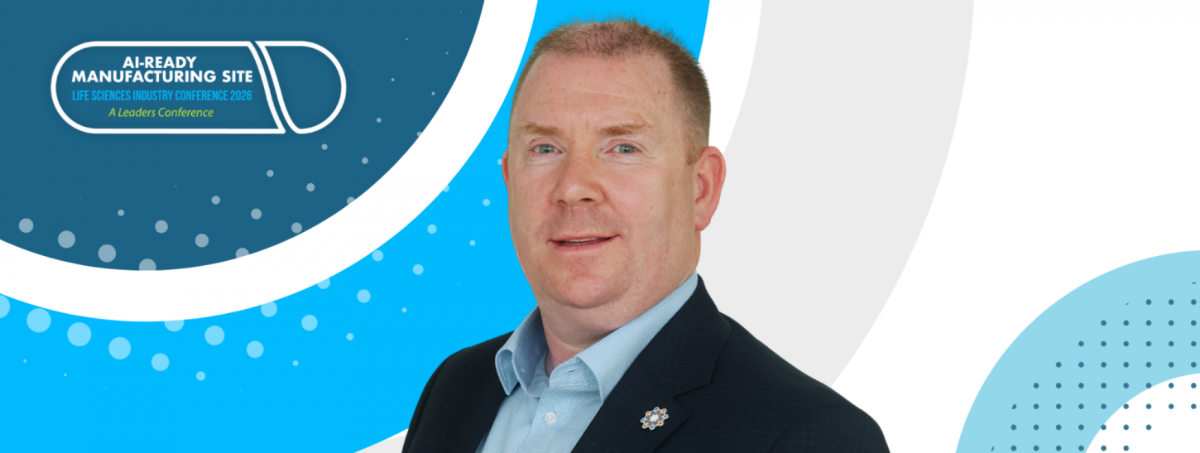
The conversation around AI in life sciences manufacturing has moved from exploration to implementation. The question is no longer what the technology might do, but what it is delivering on the plant floor today. Ahead of his panel appearance at the Life Sciences Industry Conference 2026, Dinny Crowe, Vice President, Ireland Operations at ABM, shared what that shift means for regulated manufacturers, and why organisations that delay risk falling behind.
Crowe joined ABM in 2025 with more than 30 years' experience in facilities management, driving growth, operational excellence and service innovation across the company's manufacturing, pharma, data centre and healthcare clients.
For Crowe, 2026 is pivotal because the sector has stopped talking about potential. "We are not talking about future potential any longer, but about delivering measurable operational outcomes today," he explains. AI and data-driven technologies are becoming embedded in everyday operations rather than standalone initiatives, and organisations that delay risk missing opportunities to improve performance and visibility across critical processes. The greatest value, he notes, is going to those "focused on practical applications that solve real business challenges."
Scaling AI, in his view, starts with agreement on outcomes. "Technology should never be implemented for its own sake," he says. Manufacturing teams understand operational realities, quality teams bring expertise in compliance, governance and validation, and digital teams provide the technical capability, so these groups "must work together from the outset." In life sciences, data integrity, audit readiness and governance are critical, and the strongest programmes are those where people, process and technology develop together.
Asked what would be noticeably different at a truly AI-ready site, his answer is visibility. Rather than paper-based records and retrospective reporting, teams would have "accurate, real-time information that supports faster and better decisions," with frontline staff able to reach procedures, task information and performance data instantly. Technology alone does not define it. "Strong operational foundations, trusted data and clear governance" matter just as much, as does a workforce confident using digital tools every day.
The question he believes every life sciences leader should be asking is "how can we use digital technologies to create measurable business value while maintaining the highest standards of quality, compliance and operational excellence?" For site leaders still deciding whether to attend on 22nd October, he encourages them to join the wider discussion and hear from organisations "actively applying AI, digitalisation and advanced technologies within complex, regulated environments," learning from experience that can accelerate progress while avoiding challenges others have already met.
What draws him to events like this is the chance to engage with people "focused on solving complex challenges and continuously improving performance within some of the world's most demanding operating environments." The most productive conversations, he adds, centre on practical experience: what has worked, what has not and how organisations adapted. "There is a genuine willingness across the sector to share best practice and learn from one another," he says.
Dinny Crowe will join the panel on the human side of AI adoption at the Life Sciences Industry Conference 2026 on 22nd October at the Crowne Plaza Hotel, Santry, just one week away. Book your delegate place and view the full programme at www.pharmaawards.ie/conference, and subscribe to the newsletter to stay informed on speaker announcements and agenda updates.

















.png)