

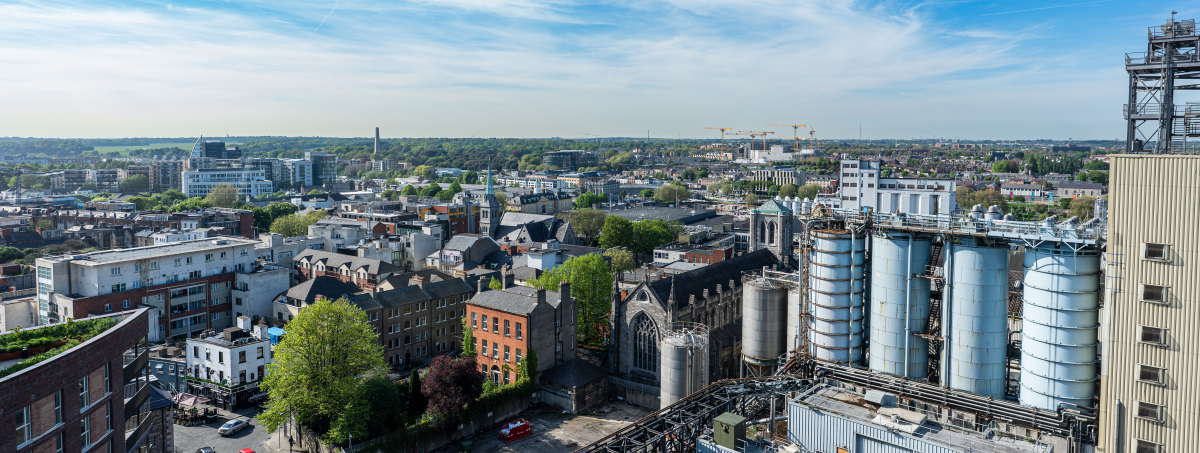
Ireland’s ability to attract the next wave of pharmaceutical investment will depend increasingly on the infrastructure available to support complex manufacturing operations. In its feature Building partnerships: how IDA Ireland helps investors source sites of all kinds, IDA Ireland outlines how its property division works with investors to identify suitable land and buildings, coordinate infrastructure providers and support the development of specialist facilities. For pharmaceutical and life sciences companies, this approach addresses an important part of investment planning: ensuring that the physical, technical and operational requirements of a new facility can be met before construction begins.
The economic case for maintaining this investment capability is substantial. Goodbody's 2026 pharmaceutical sector report estimates that Ireland's pharmaceutical exports reached €139 billion in 2025, accounting for 53% of all goods exports. It also estimates that around 75,000 people work in pharmaceutical manufacturing and related activities. The report highlights Ireland's established position in biologics and advanced therapeutics, reinforcing the importance of maintaining the infrastructure, skills and investment environment that support high-value production.
IDA Ireland reports that its regional property programme includes 1,400 hectares of available land, 52 business parks and 12 strategic sites, with 23 projects currently in delivery. The agency is also progressing plans for up to three Next Generation Sites designed to support large-scale investment in life sciences and semiconductors. These developments are significant because pharmaceutical manufacturing requires more than a suitable building. Access to dependable electricity and water, appropriate planning, specialist construction expertise and infrastructure capable of supporting complex production processes all influence whether a project can progress efficiently.
The wider employment impact is also clear. The Central Statistics Office's Pharmaceutical and Medical Manufacturing in Ireland 2019–2025 report recorded 96,848 employees across the combined pharmaceutical and medical technology sectors in 2025, representing a 60% increase from 2019. The CSO also reported that employment earnings in these sectors reached €7.9 billion in 2025. These figures demonstrate the scale of the wider industrial ecosystem and the regional economic value associated with maintaining its capacity to expand.
For pharmaceutical manufacturers, development-ready locations can create a more coordinated route from investment decision to operational production. Early engagement with energy and water providers, planning authorities, developers and specialist suppliers can help identify infrastructure requirements before they become obstacles during project delivery. It also creates opportunities for domestic engineering, construction, cleanroom, automation, validation and facilities management providers to participate in the development and long-term operation of new sites.
Ireland's next phase of life sciences growth will therefore depend not only on its ability to attract international investors, but also on how effectively it prepares for their operational needs. By developing strategic sites, coordinating essential infrastructure and strengthening partnerships across the supply chain, Ireland can create a more supportive environment for complex pharmaceutical manufacturing. Infrastructure readiness is becoming more than a property consideration: it is an important part of the country's long-term competitiveness in global life sciences.
























.png)